Raven Row, London, UK
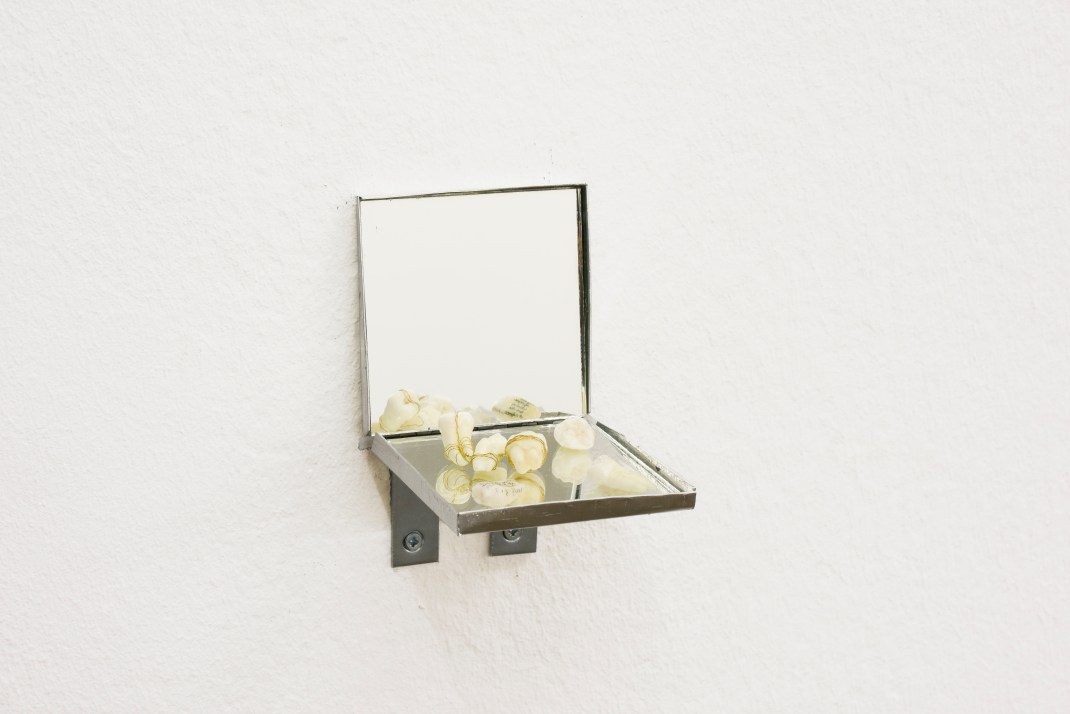
Image: Deborah-Joyce Holman – Thicc and Slippery, 2020. Courtesy of Raven Row.
Curated by writer Imani Mason Jordan, Nomenclature For The Time Being is a group show centred on sculpture that teases out notions of identity from the Black feminist diaspora. In the words of the curator, Dionne Brand’s longform poem, from which the exhibition title is borrowed, informs the exhibition in “both invocation and method”. Written in the aftermath of the pandemic, the poem reflects on the “the Anglo-American prison of thought” and seeks avenues for escape from “the scrim of their philosophies”.
The accompanying exhibition text, designed to resemble a political pamphlet and containing prose that might be found in such, states that the show is “about the absent body – its hypersensitivity and disappearance”. This is certainly exemplified in many of the pieces here.
Atiéna R Kilfa’s photo series Espresso Adagio No 1 & No 2 (2025) depicts black coffee poured into a disposable cup. A white sugar cube is swallowed by the liquid, symbolising a reversal of Eurocentric cultural domination. Upstairs, Deborah-Joyce Holman’s Thicc And Slippery (2020) is a miniature display of human teeth on a mirrored shelf. Bound in wire and marked with ink, the teeth represent an individual’s final remnants after death and question whether we ever have total ownership of our bodies.
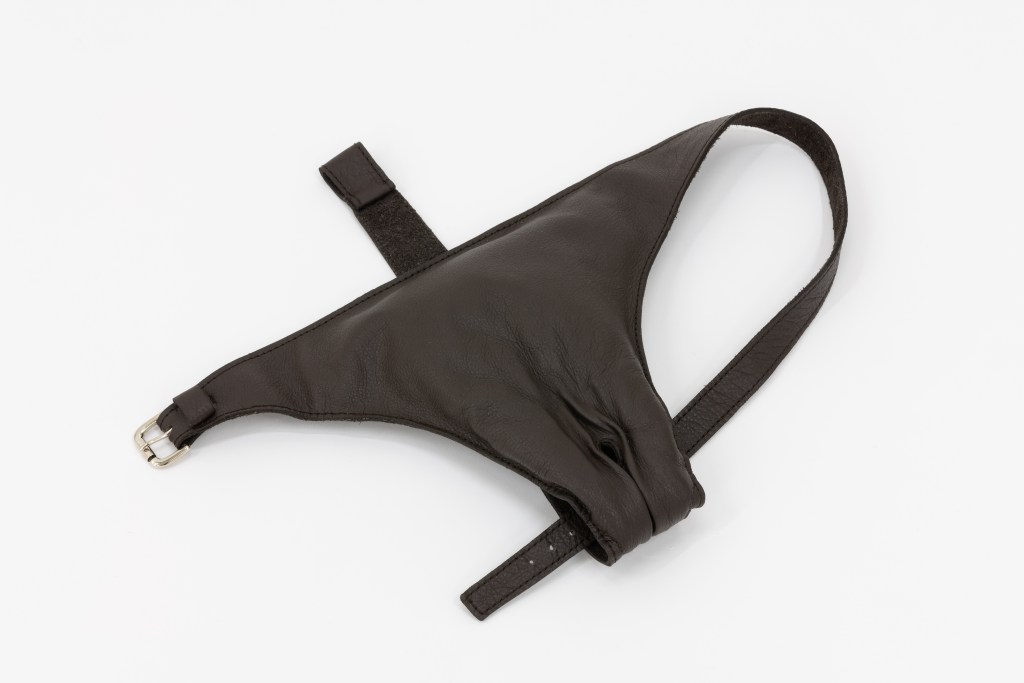
Ebun Sodipo’s work assembles archival objects that foreground “Black trans presence where the record has erased it”. Amulets and carved nude figurines, assembled in a glass case, variously suggest their owners’ attitudes to gender and recall Katie Paterson’s Afterlife (2025), a grand Folkestone Triennial installation of fictional artefacts. Meanwhile Sodipo’s Prosthesis for freedom – Mary Jones’ ‘piece of cow [leather? pierced and opened like a woman’s womb (2022) is inspired by a 19th century trans woman who wore leather underwear with a vulva-like opening in an act of self-definition.
The exhibition is further activated by a series of performances. On the evening I visit, Jordan is joined by Alpha Maid, Jay Bernard, Remi Graves and Elaine Mitchener in an extended reading of Brand’s poem. Bernard is the anchor for the majority of the performance, reading the text straight. Mitchener scrapes a water bottle across the floor, etching a magick circle around the group. The others interject with phrases such as “Why am I on Earth with these people?” that cycle in a crescendo of crosstalk as Alpha Maid draws angular drones and loops from her guitar.
The purpose-built performance space, with its timber platform and corrugated metal sheets mounted on the walls, references Brand’s film Long Time Comin’ (1993) which features the building of a community centre by queer activists in Canada. These materials also serve as percussive instruments. Graves strikes the metal in between readings, while Bernard taps contact mics attached to the platform with heartbeat regularity. The resulting beats punctuate Jordan’s voice as they muse on “unforgivable narrations” causing suppressed explosions that “detonate nevertheless” inside the author.
Alpha Maid’s dangerous textures are like sand slipping inside an hourglass. As the quilt of syllables unravels and pages of the text are thrown into the air, the anger of the reader becomes palpable. The words die down but the dust is whipped up a final time by Mitchener’s thunderous solo, her handheld fan beating the metal. It lasts for longer than feels comfortable and the intensity reverberates in the mind long after the audience vacates the space.
Ilia Rogatchevski
Originally published by The Wire, September 2026

